Phnom Penh, Cambodia
28 Jan 2011
First sabbatical
Goodbye Kampuchea good morning Vietnam
The first sun rays find their way through the many French colonial-era buildings. Despite the early morning hour (just past 6 a.m.), Phnom Penh is already in frenetic motion. In about two hours I will be leaving Cambodia’s capital and sailing into Vietnamese waters – this is my last chance to say goodbye to the country and its people.
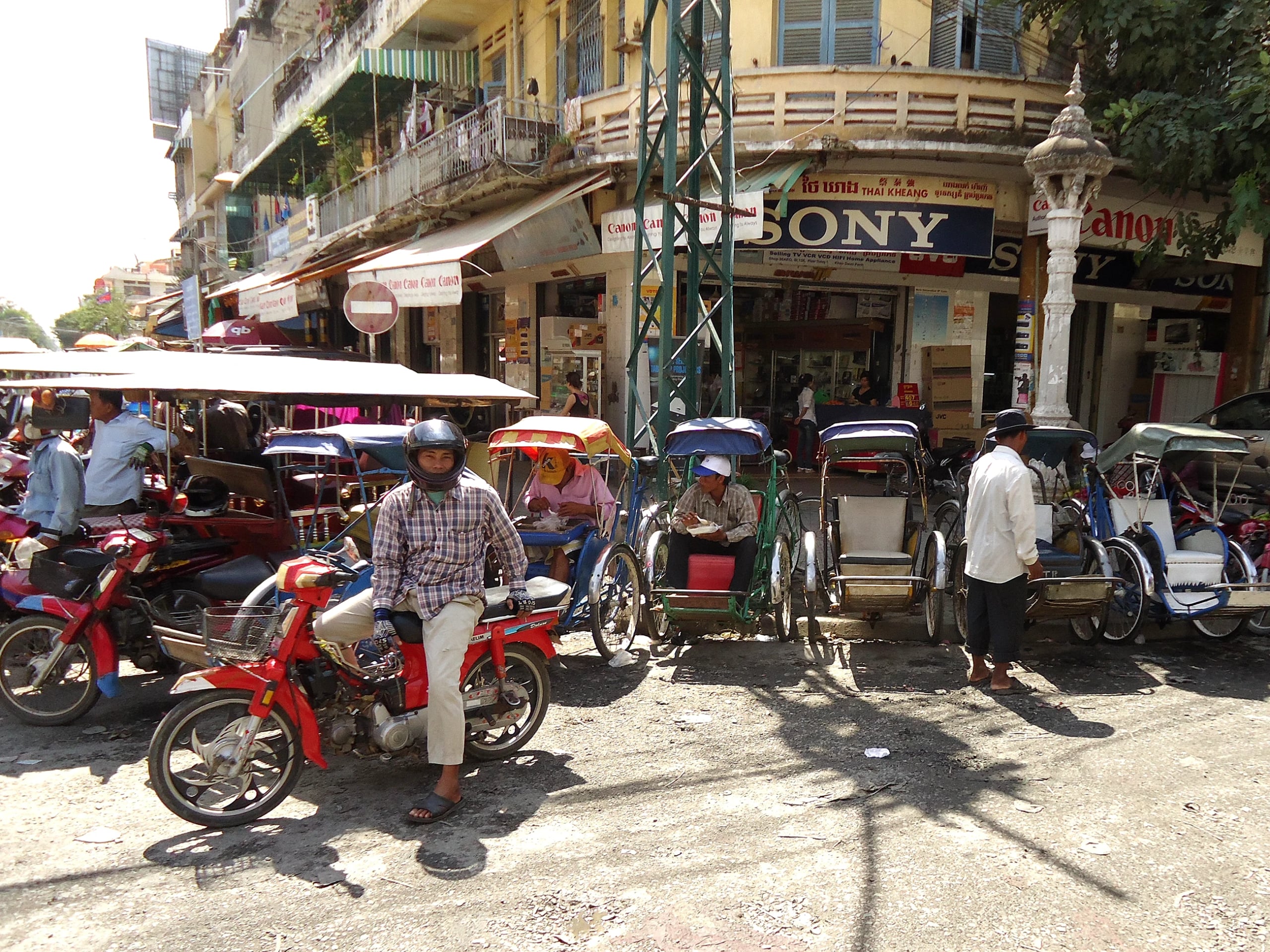
I leave my guest house for a final stroll. It doesn’t take long before I’m greeted by motorbike and tuk-tuk drivers. There are thousands of them in Phnom Penh. They gather at every junction, usually in groups of five. During the hot hours of the day, you’ll find them lying down, sleeping, or gambling near their vehicles. It is impossible to avoid them. At the glimpse of a foreigner, they awaken all senses and, with surprising vitality, ask, “Where do you go, sir? Do you need motorbike? Tuk-tuk?” As a foreign tourist, you’re asked these questions every three minutes if you're moving – on a bad day, it’s extremely hard not to be rude.
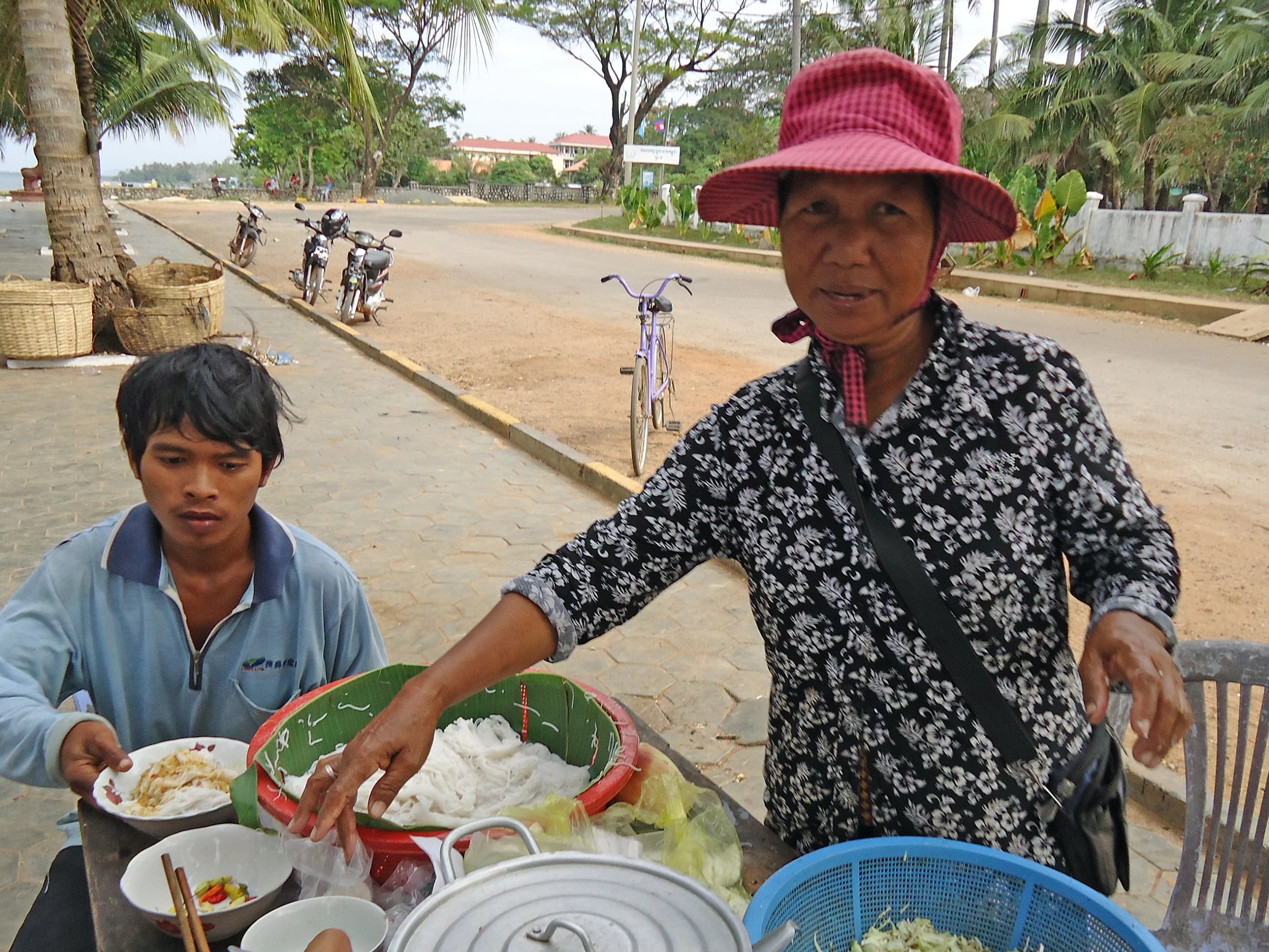
I walk straight to the street market in search of something to eat. One can find almost anything edible here: meat, fish, vegetables, insects, cakes, sweets, bread, hot meals, cold meals, drinks, and so on. Stalls line both sides of the road, leaving only a narrow passage for people, animals, and motorbikes. Everyone rushes, pushes, bargains – it is life at stake. I buy some bananas, one kilo of peanuts, two waffles, and order a cup of coffee from a drinks stall. I sit on the pavement for breakfast. I seem to be the only foreigner around – probably due to the early hour. Some of the people passing by can’t help staring at me. I wonder what they’re thinking… “This fucking foreigner, enjoying himself eating waffles with bananas and drinking hot coffee while I struggle to earn a few cents…” Most of Cambodia’s population lives on less than one U.S. dollar per day, and from what I’ve seen, most of them (women especially) work seven days a week from sunrise to sunset. Although life in Cambodia today is anything but easy, it still cannot be compared to the overwhelming violence of the civil war and the Khmer Rouge massacre.
I return to the guest house, where someone is already waiting to take me to the boat to Vietnam. I pick up my backpack, say goodbye to the staff, and hop on the motorbike. I’m taken to a hotel and then put on a bus. I’m told we still need to drive for two hours before boarding the boat. The bus is completely empty. “Am I the only one crossing the border by boat?” – “Yes, sir, no one else today.” I shrug and start reading. I fall asleep instantly.
“Sir, would you please get out of the bus?” I wake up and realize we’ve reached the Cambodian border. I hand my passport to the driver, who tells me to wait on a bench. It’s 11:30. By now I thought I would already be in Vietnam… The driver returns with my passport, tells me everything is fine, and that we must wait for the boat – “only 15 minutes.”
It is 1:20 p.m. when the boat finally arrives. Between thirty and forty Westerners step off, arriving from Vietnam. “We” really stand out… bigger, fatter, sunburned, digital cameras hanging from our necks. They enter Cambodia; I board the boat to Vietnam.
Since I’m the only passenger, I realize how lonely this half-day has been. Besides me, there are only the captain and his assistant, both Vietnamese. The captain, a middle-aged man, wears no shirt, has a tough expression, and avoids eye contact – presumably because he doesn’t speak any English (later confirmed). His assistant is a friendly and helpful young woman, from whom I gather some basic information about their country. On the boat, she sells me a bus ticket to Hòn Chồng and gives me the address of what is supposed to be a very cheap guest house in Châu Đốc, my destination. I run out of questions, and she seems to have no interest in further conversation. She puts on her headphones while I pick up my paperback. I fall asleep.
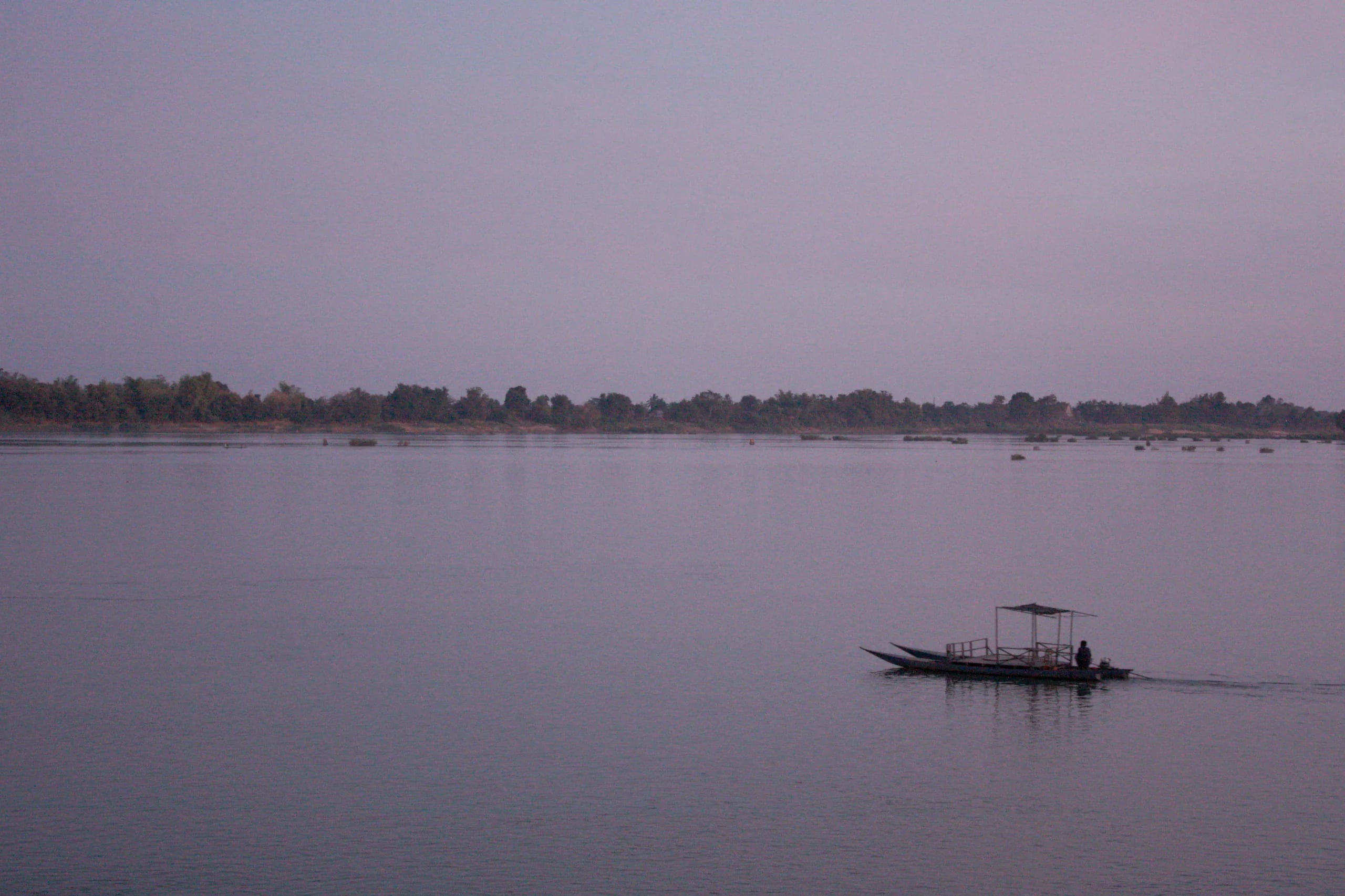
“HEEEEYYY!” shouts the captain. We have arrived in Chau Doc. I open my eyes and see him swapping the Cambodian flag for the Vietnamese one, offering me a final image of Angkor Wat – good morning, Vietnam.
Further reading
Cang Hòn Chông, Vietnam
3 Feb 2011
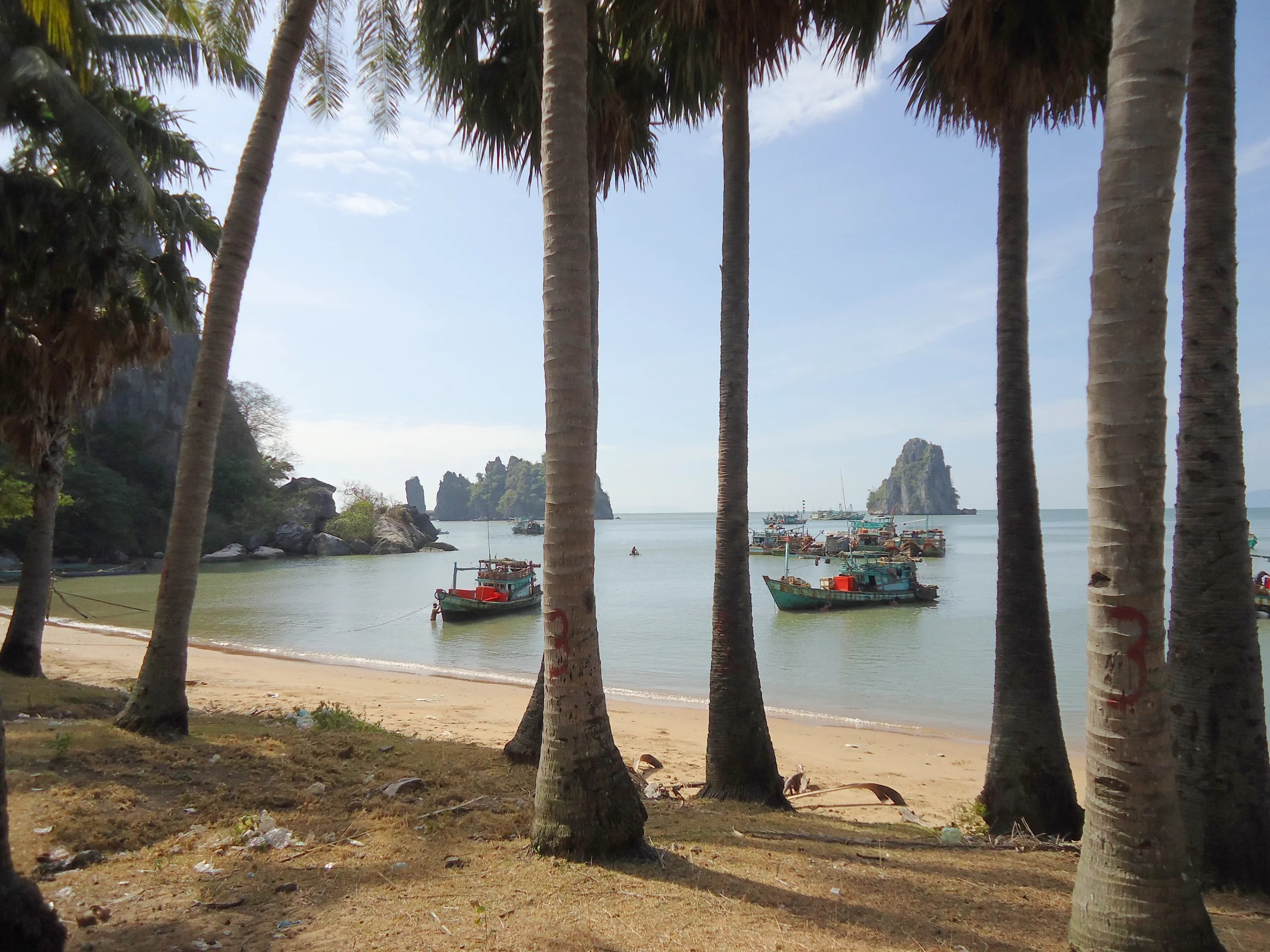
One Zuhause in Hon Chong
I found a homestay in a remote fishing village: an unfinished brick house run by a single mother of three, with a room just meters from being swept away by the sea.
Dalat, Vietnam
7 Feb 2011
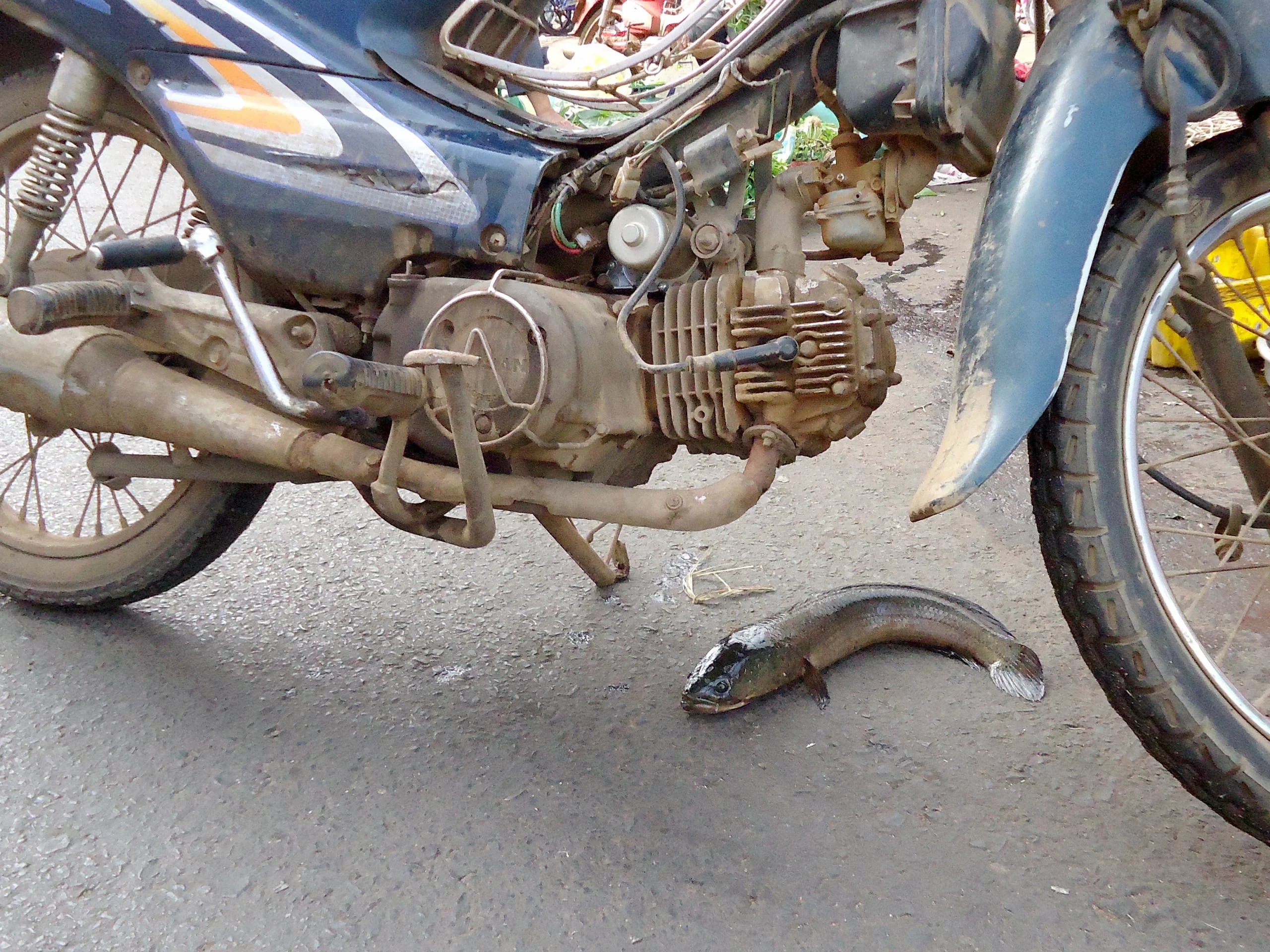
Where is Wally or the spellbound curiosity
I couldn’t walk three steps in Đà Lạt without being pulled into a family picnic for a quick photo shoot and a shot of rice whiskey.
Ha Long Bay, Vietnam
20 Feb 2011
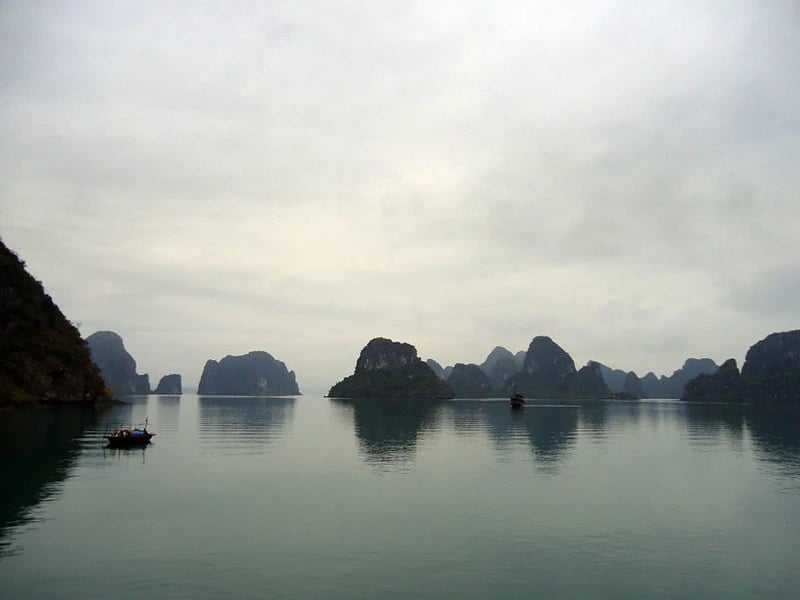
Death, magic and farewells
My last few days in Vietnam
Cameron Highlands, Malaysia
25 Feb 2011
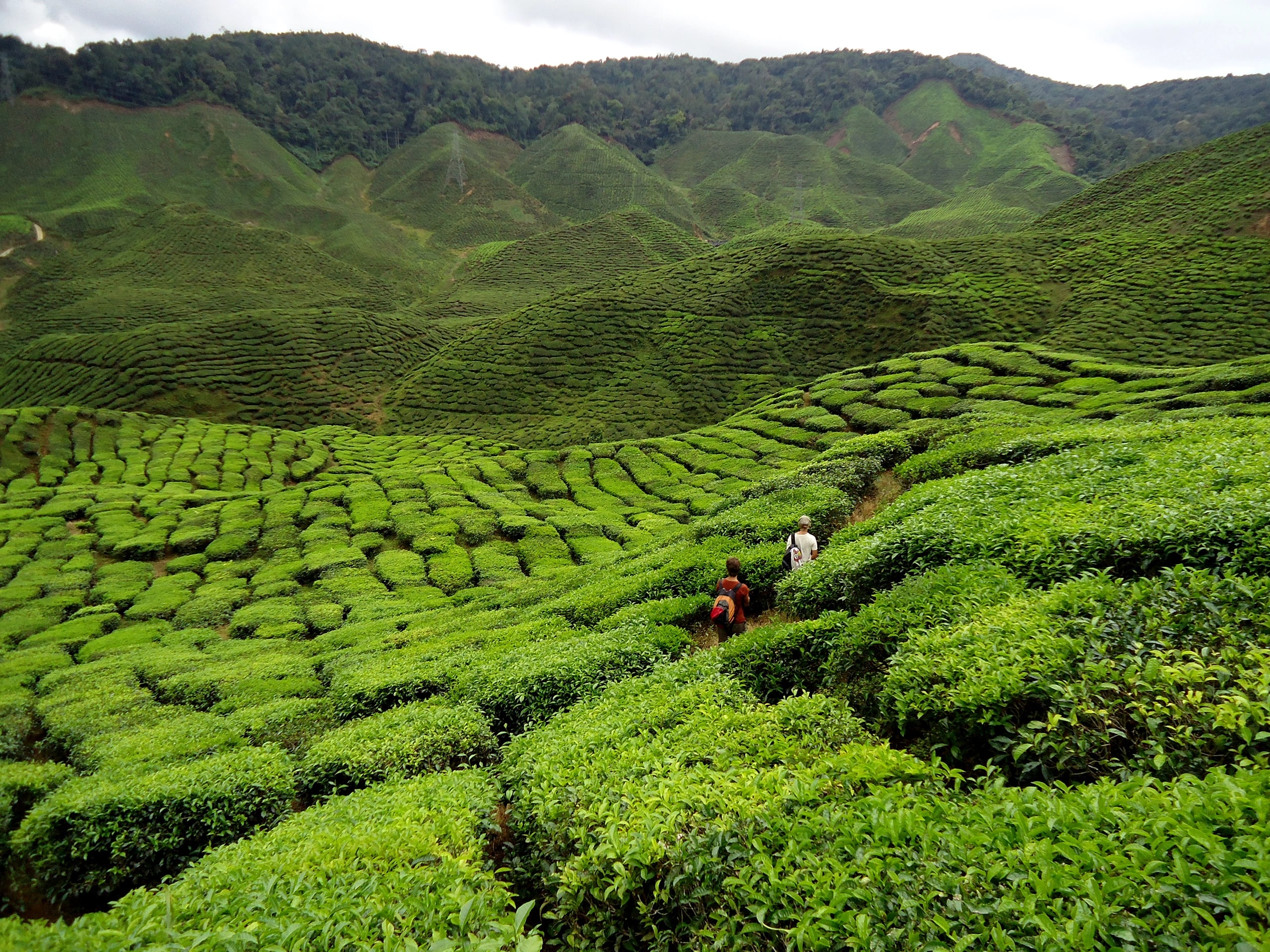
The Cameron Highlands
Green hills and never-ending tea plantations – bliss in the Malaysian Highlands